
Free DSO calculator
How quickly are your sales turning into cash?
Use our free DSO calculator to see how long, on average, it takes your business to collect payment from customers. Track it over time and you’ll quickly see whether money is moving through the business as expected, or spending too long sitting in accounts receivable.

Someone hasn’t paid? Start here.
Calculate your days sales outstanding
DSO is a standard finance measure used to track how quickly credit sales are collected. Enter your accounts receivable, total credit sales and the number of days in the period to estimate yours.
DSO Calculator
Enter the total amount of money owed to your company by your customers at the end of the period.
Enter the total amount of sales made on credit during the period.
Enter the number of days in the period (e.g., 30 for a month, 365 for a year).
DSO Formula
DSO = accounts receivable ÷ credit sales × number of days
For example: if your accounts receivable is £50,000, credit sales for the period are £100,000, and the period is 30 days:
£50,000 ÷ £100,000 × 30 = 15 days
Your business is taking approximately 15 days, on average, to collect its credit sales.
What your DSO result means
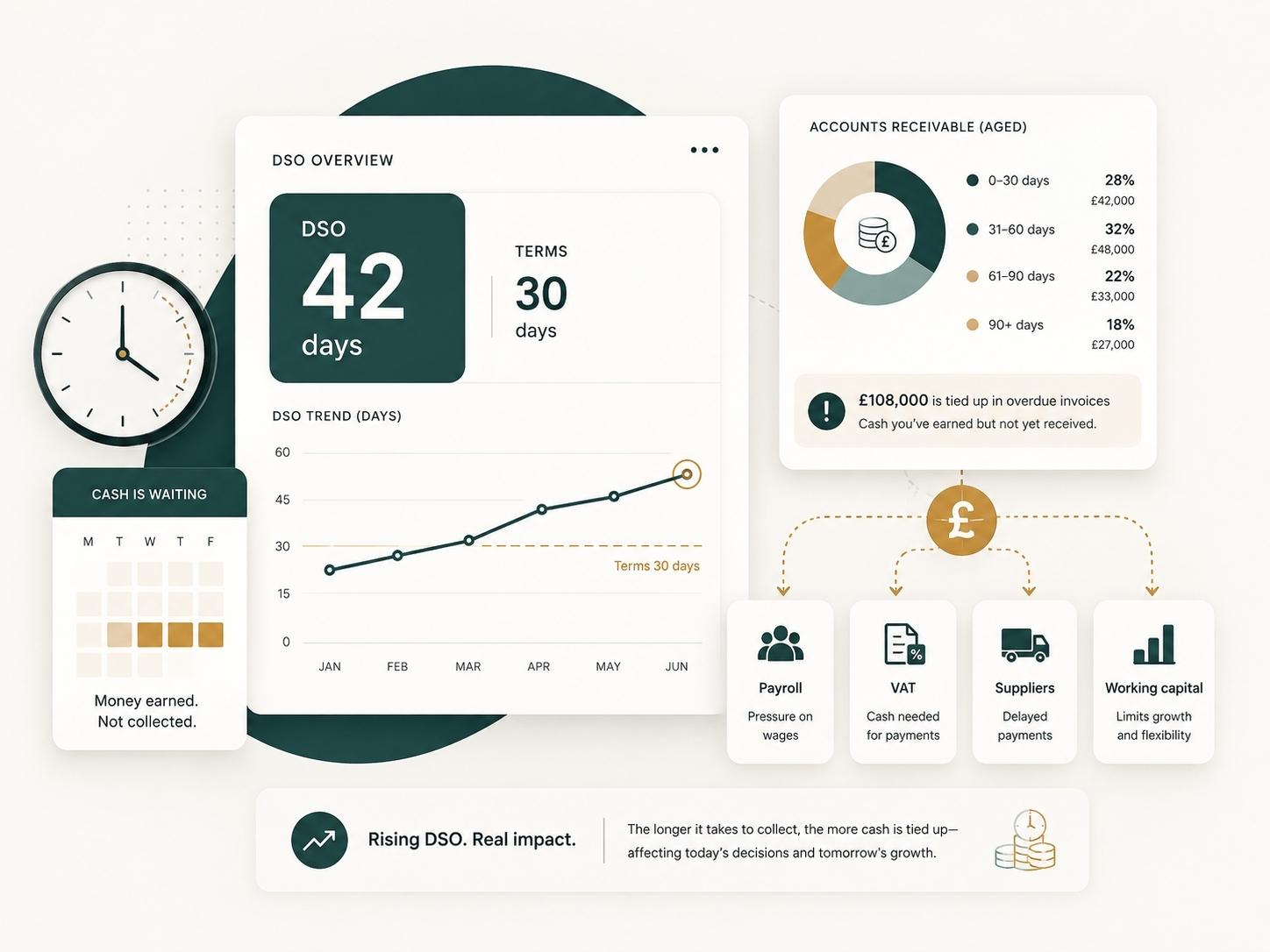
Your DSO shows the average number of days it takes your business to collect payment from customers.
There isn’t one perfect DSO for every business. Your payment terms, industry and customer mix all matter. What matters most is how your result compares with your agreed terms and whether that number is improving or creeping upwards over time.
Why DSO matters
WHAT SITS BEHIND THE NUMBER
What's usually driving a high DSO
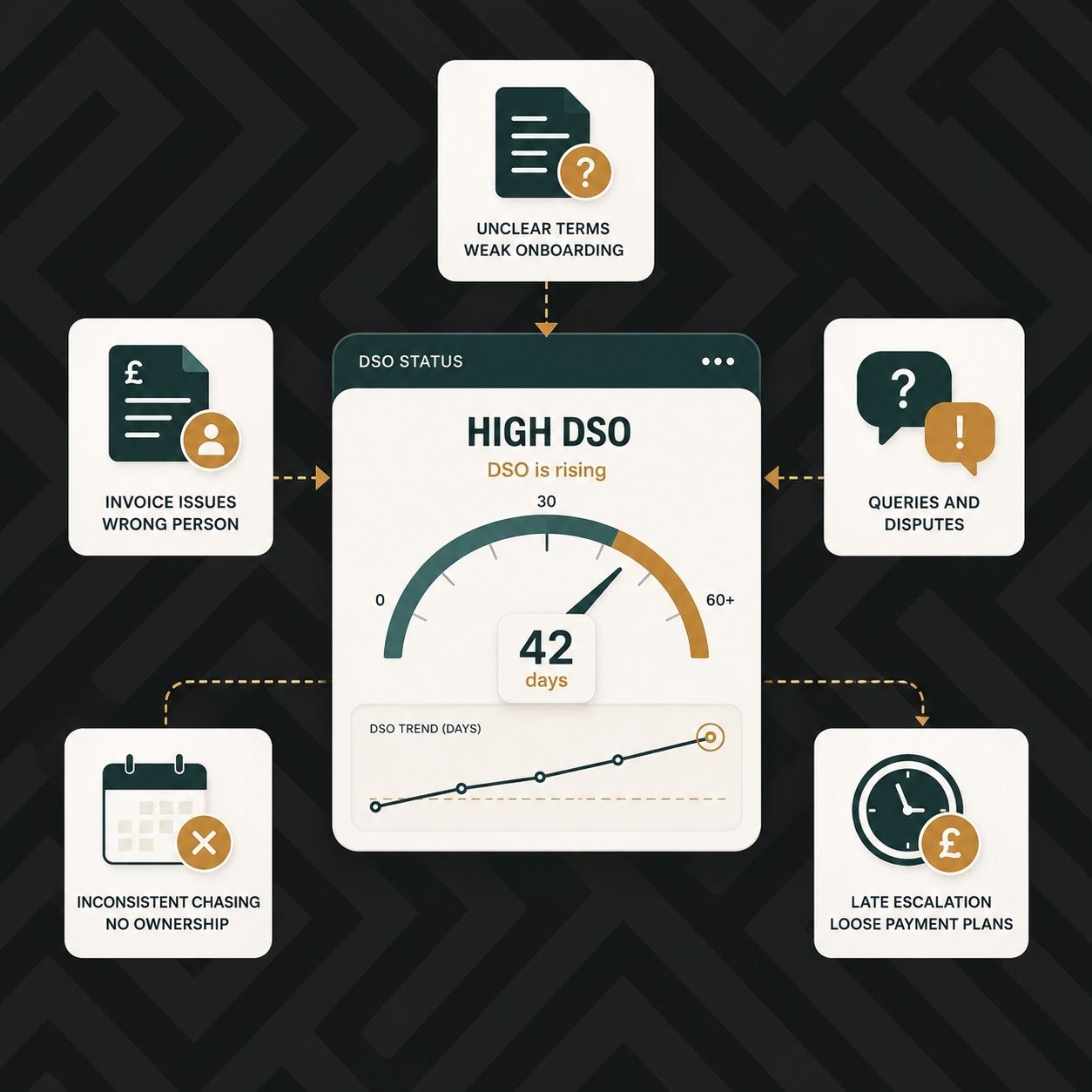
A high or rising DSO often points to weaknesses somewhere in the credit control process:
- Payment terms aren’t clear from the outset
- Invoices are sent late, incorrectly or to the wrong person
- Purchase orders or other payment requirements are missed
- Queries and disputes take too long to resolve
- Chasing is inconsistent or nobody clearly owns it
- Payment promises aren’t followed up
- Payment plans and overdue accounts are escalated too slowly
DSO becomes much more useful when you look at it alongside your aged debtor report and customer payment behaviour. Together, they show both how long payment is taking and where the problem sits.
THE SCALE OF LATE PAYMENT
Late payment is tying up billions in UK small businesses
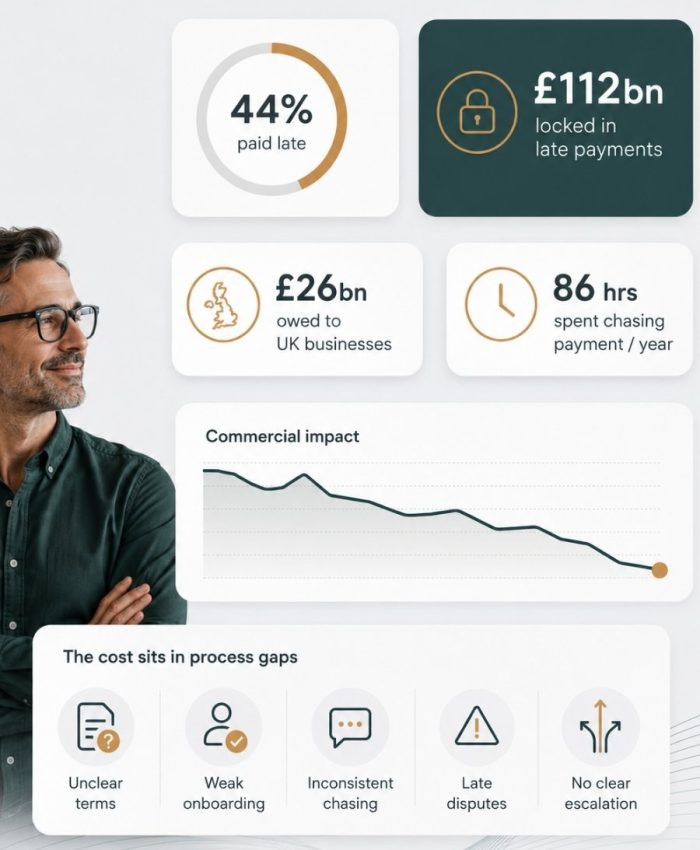
Recent Sage and CEBR research found 44% of invoices were paid late, with an estimated £112 billion tied up in overdue invoices.
Government-backed research also estimates businesses are owed £26 billion in late payments at any given time, while affected businesses spend an average of 86 hours a year chasing payment.
Your DSO brings that wider problem back to one useful question: how much of your own cash is taking longer than it should to arrive?
Start with the cause, then bring the number down
- Was it sent correctly and on time?
- Does Accounts Payable have everything they need?
- Are queries dealt with quickly?
- Are payment promises recorded and followed up?
- Does everybody know when an account needs firmer action?
Fix those gaps and you start improving the way money moves through the business, rather than repeatedly chasing the same late-payment problems.
FIND THE RIGHT NEXT STEP
If your DSO needs attention, start here
Your result can point to several different problems. Collect Wise gives you a clear route depending on what’s happening in your business now.
Aged debt action plan & templates
For debt that’s already overdue.
Get a 30-day collection plan, priority chasing list and practical wording for reminders, disputes, broken promises, payment plans, escalation and Letter Before Action.
Credit control review & setup
Credit control
training
For teams responsible for getting invoices paid. Practical training for admin, finance and operations teams covering overdue invoice chasing, payment conversations, common excuses, payment promises, disputes and when to escalate.
Things You Need to know
Frequently Asked Questions
What is DSO?
DSO stands for days sales outstanding. It estimates how many days, on average, it takes your business to collect payment after a sale.
How do you calculate DSO?
Accounts receivable divided by credit sales, multiplied by the number of days in the period.
What is a good DSO?
It depends on your industry, payment terms and customer type. The most useful thing is to track your DSO over time and see whether customers are paying faster or slower.
What does a high DSO mean?
Customers may be taking longer to pay. It can also point to weak payment terms, invoice queries, inconsistent chasing, poor credit control or late escalation.
How can I reduce DSO?
Start by reviewing payment terms, invoicing, customer onboarding, query handling, chasing rhythm and escalation points. Without a clear credit control process, late payment will usually keep coming back.
Is DSO the same as aged debt?
No. DSO shows the average time it takes to collect payment; aged debt shows which invoices are overdue and for how long. Look at both.
Can Collect Wise help reduce DSO?
Yes. Collect Wise helps SMEs review aged debt, improve credit control processes, set up clearer chasing routines and train teams responsible for collecting payment.